

6,000 patient consultations
over 3 hospitals (Westmead, Blacktown and Auburn) in 2025
7.3 million people
67% of Australians
aged 50 years and older have poor bone health (osteoporosis or osteopenia)
Our Mark in Westmead Hospital
Common muscloskeletal conditions are common in Australia, with about 30% living with at least one of these conditions. Last year, the Rheumatology Department performed thousands of consultations over three Western Sydney Local Health District Hospitals, including Westmead.
Our team is working on research to identify which medications will work for each individual based on DNA and targeting methods. This will create a quicker and safer route for the treatment of each patient.
How your donation will help
With your support the Rheumatology Department will be able to fund research on targeted medication for patients.
Meet the Research Team
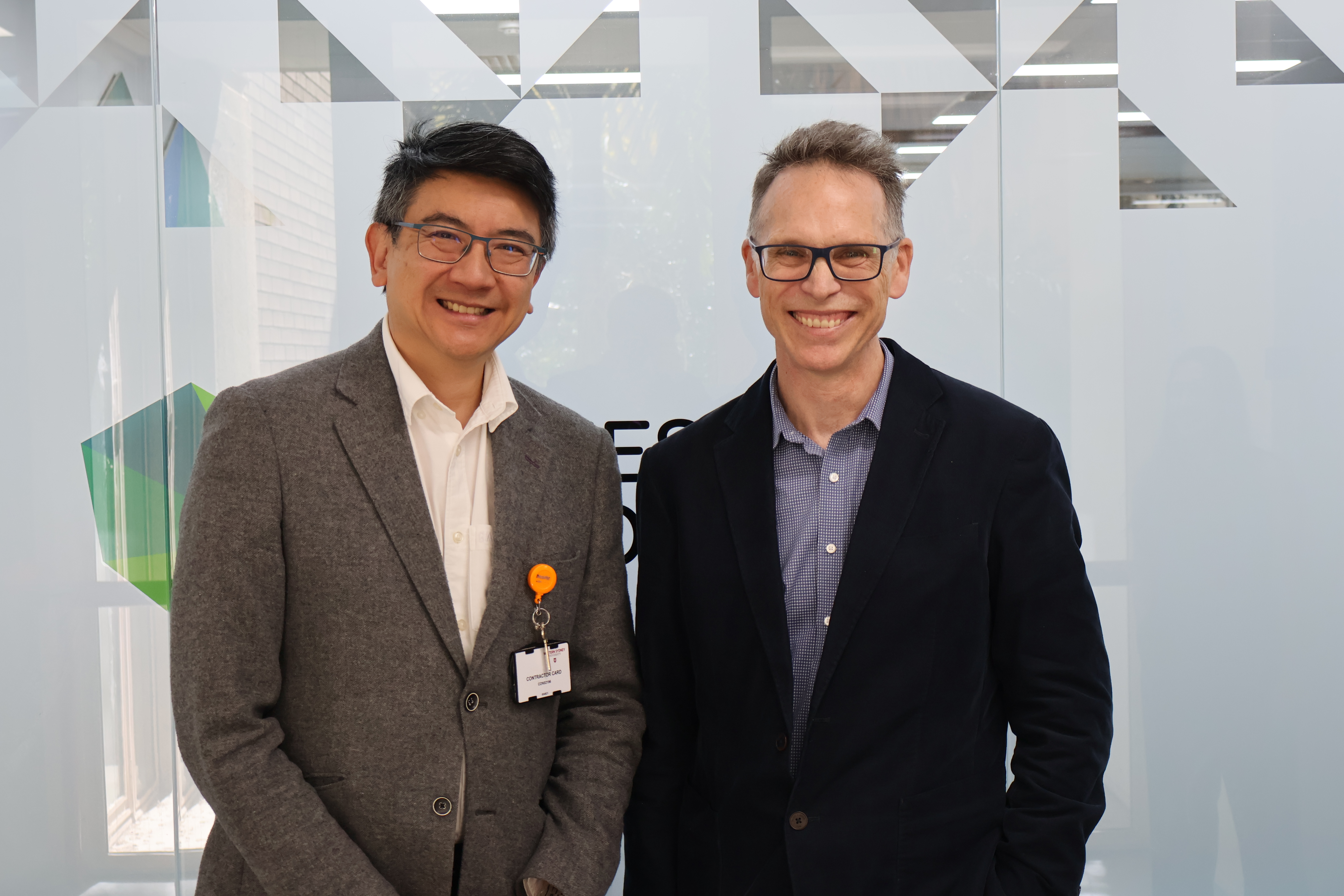
Professor Peter Wong and A/Professor Grant Logan are medical staff and researchers dedicated to improving patient care and the way that their patients can experience the world.
Dr Peter Wong has spent his medical career taking care of people with arthritis, both psoriatic and rheumatoid. He loves to call himself the, “aches and pains doctor”.
Dr Grant Logan has been studying molecular and cell-based immunotherapies for over 20 years. He pinpoints the start of his career from a $100,000 grant from the Rebecca Cooper Foundation. For Grant that $100,000 has carried him and his research community to where they are now. With that money Grant was able to hire one of his closest colleagues with whom he still collaborates.
Today, Dr Wong is working on targeting pharmaceutical therapies to treat patients. Currently, in Rheumatology, there are around many different targeted treatments, but not every person will respond the same. It can sometimes be a “best guess”, ie try for a while, then if it doesn’t work, try a different drug. The idea is to create a “test” to help work out which is the correct targeted treatment the first time.
Dr Logan is working on exciting gene therapy to insert DNA into the liver which will cause the liver to provide a molecule that will turn off inflammation in the rest of the body. This will have enormous implications for treatment of a range of inflammatory conditions.


